Equisetum fluviatile L.
characteristics
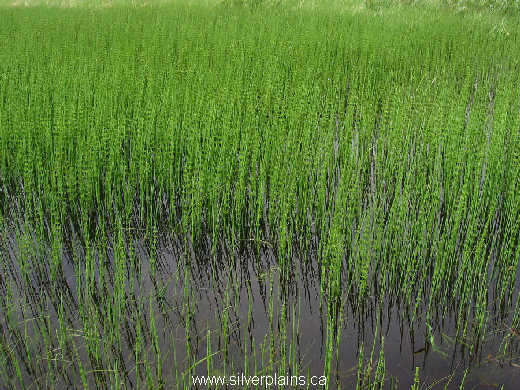
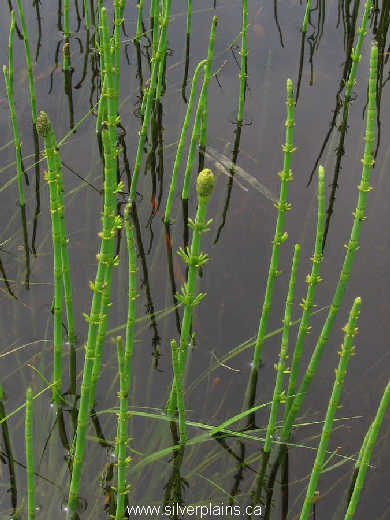
Erect perennial with green, ridged stems which are 80% hollow. Tiny leaves grow in whorls along the stem. Reproduces by spores and rhizomes; mostly the latter. Yellow-green spores are produced at the cone-like stem tip. Often found growing in dense colonies. Can be invasive.
| T | SSN | H | W | sun | soil | H2O | fire | N2 | pH | summer | fall | flower (seed) |
|---|---|---|---|---|---|---|---|---|---|---|---|---|
| P | CW | 1.0 | 0.4 | S/PS | F-M-C | MW-Z- | - | - | - | green | orange | cream-green |
habitat
Shorelines, ponds, swamps and ditches.
uses
Waterfowl eat the roots and stems.
Used by North American aboriginals for sanding and scouring due to the silica content in the stem.
Heavy metals are absorbed from the soil by this plant; used for bioassays.
Equisetum is the sole surviving genus of a group of primitive plants from the Carboniferous period (300 million years ago); some of which species reached up to 30 m tall.

Comments