Typha latifolia


characteristics
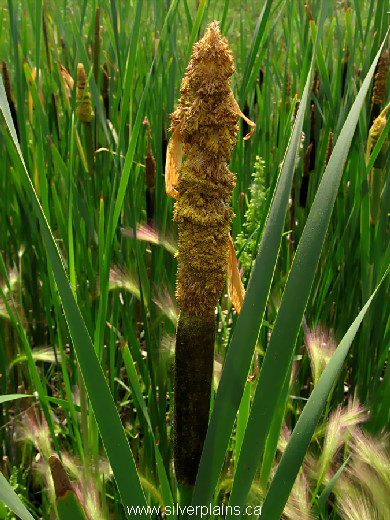
The long graceful leaves and velvety, dark brown flower head are a common sight throughout North America. Spread by both rhizomes and seed (viable in the seed bank for up to 100 years); few plants are more abundant. Although native, this opportunistic wetland species is often considered invasive. It will take over areas if left unchecked.
Similar to narrowleaf cattail, Typha angustifolia L. which is believed to have been introduced from Europe into North America from dry ballast of European ships. Narrowleaf cattail is also considered to be an invasive species which spreads more readily than common cattail and tends to form monocultures. The two plants often hybridize; while the hybrids are thought to be sterile they spread rapidly by rhizomes.
- common cattail
- short, wide seedhead
- wide blades
- narrowleaf cattail
- long, narrow seedhead
- narrow blades
| T | SSN | H | W | sun | soil | H2O | fire | N2 | pH | summer | fall | flower (seed) |
|---|---|---|---|---|---|---|---|---|---|---|---|---|
| P | W | 3.0 | S | S | F-M-C | M-W | ••• | - | 5.5-7.5 | green | yellow beige | brown |
habitat
Marshes, wet meadows, bogs, and ditches.
uses
Cover for muskrats (who also eat the roots), some waterfowl and white tailed deer.
Favourite nesting plant of red-winged blackbirds.
Past uses:
Stems, leaves, and rhizomes as food for North American aboriginals;
thatch for roofing; pollen in making fireworks; seeds as lining for diapers.
Poor choice for reconstructed wetlands:
While Typha species remove Nitrogen (N2) and phosphorus (P) from water they are also capable of growing in dense monocultures, especially in disturbed habitats where populations respond by spreading vegetatively at rapid rates. Typha stands increase silting, obstruct travel, hinder fishing, and recreational activities, and offer breeding grounds for mosquitoes.
Ecological impacts include closing of open water areas, eliminating habitat and species diversity, and reducing and replacing native plants. Typha stands can dominate shorelines and wetlands and replace native plants important for waterfowl and wildlife.
Source: Narrowleaved and Hybrid Cattail - Invasive Plants Found in Manitoba

Comments